Sunday, July 01, 2007

Erdély induló : PART FOUR*

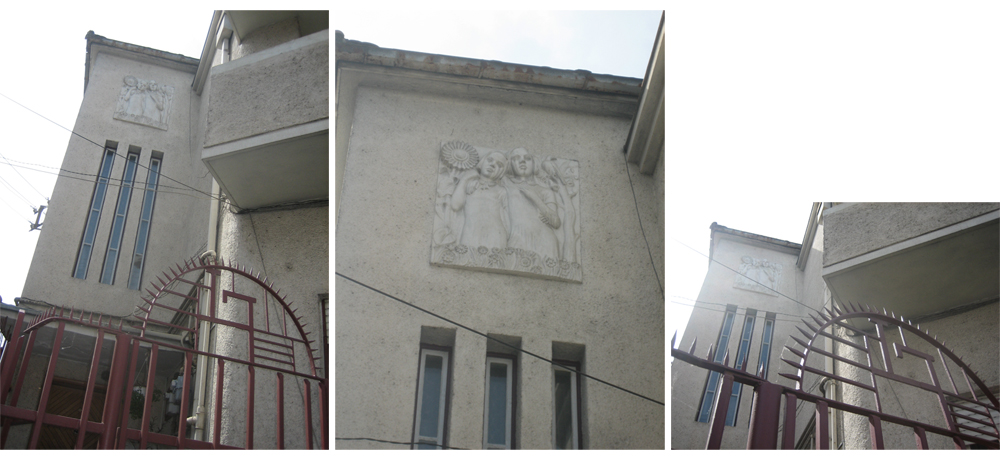
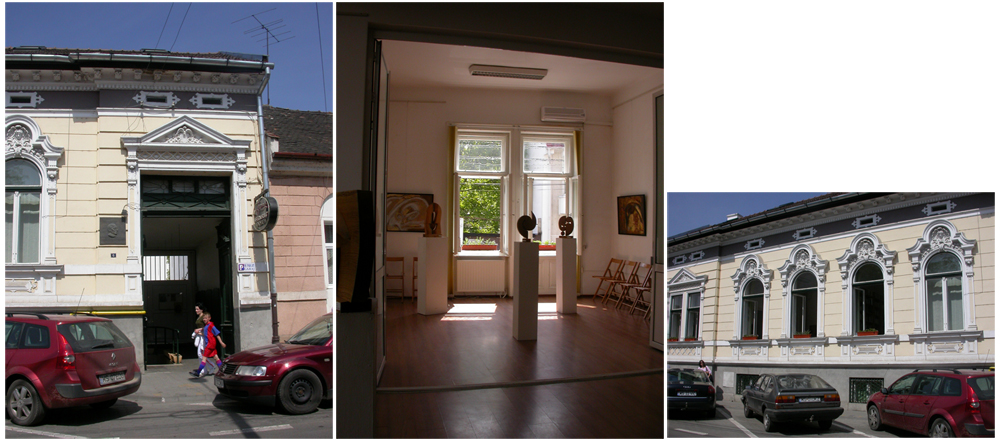
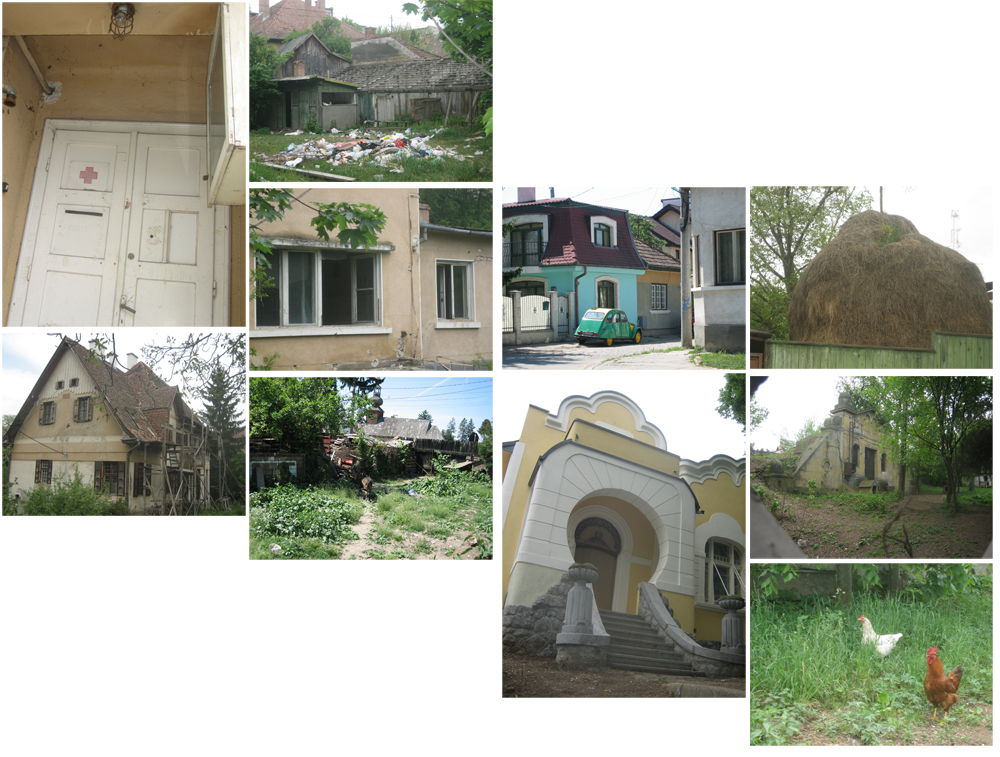
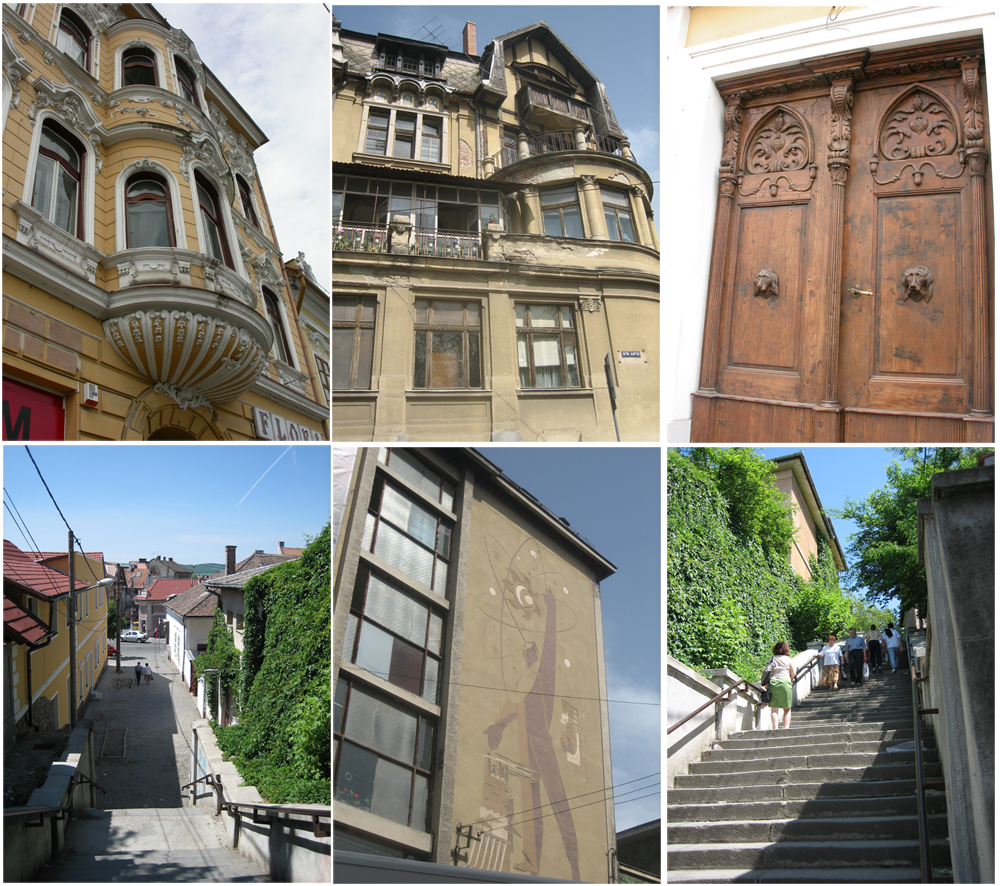
In exploring Tirgu Mures, we found much that we had never expected to see. I, for one, was unaware of the painstaking skill put into every piece of architectural design and interior decoration. My mother remarked to me that in her time, she had never noticed it either. "It just didn't occur to me to look up and marvel at something."


She did, however, find a world to gaze upon in puppetry, and she spent hours and hours as a child watching puppet shows in a local theatre devoted to the activity. It's now a cafe, so over some "capps", we discussed how things had changed, not just on the outside, but in her mind as well. Feelings were mixed, no doubt. As much as they were about loss, those feelings and perceptions came from discovery, not only of the new things, but the ones she had always known.


We decided to shoot the town and revel in art in and design. Some of the best art, we found, had been made by kids at a school.


At the ethnographic museum, Hungarians displayed their unrivalled skill at crafting obscure Transylvanian ceramic stoves...


...and the Teleki Library houses thousands upon thousands of first edition texts of numerous languages and disciplines, from across written history. Highlights included: hand drawings of designs for turn of the century mechanical horses; Tycho Brahe's book on comets; the first texts ever printed in Hungarian and Romanian; a hieroglyphics chart; and Benjamin Franklin's first book on electricity. It's all under glass, lock and key, of course, but a family friend runs the place, so we got a decent tour.


Also celebrated at the museum are Janos and Farkas Bolyai, the father and son who theorized non-Euclidian geometry (a huge hit for fans of three dimensions, and possibly those of the 4th and 5th). I got to see their original notes, and their skulls. They named my father's school after one of them, and it's only 450 years young.


My grandmother on my dad's side made her living at the Kultur Palota, teaching and playing violin. She taught scores of children across generations how to play, including a future conductor of world renown. My grandfather played there, too, and my dad attended hundreds of concerts in the theatre. I'm pretty sure the acoustics of the venue are hard-wired into my neural networks, in Jungian fashion.


The innards are a shrine to Hungarian folklore, famous composers (Fransz Liszt) and nationalist heroes (Lajos Kossuth).


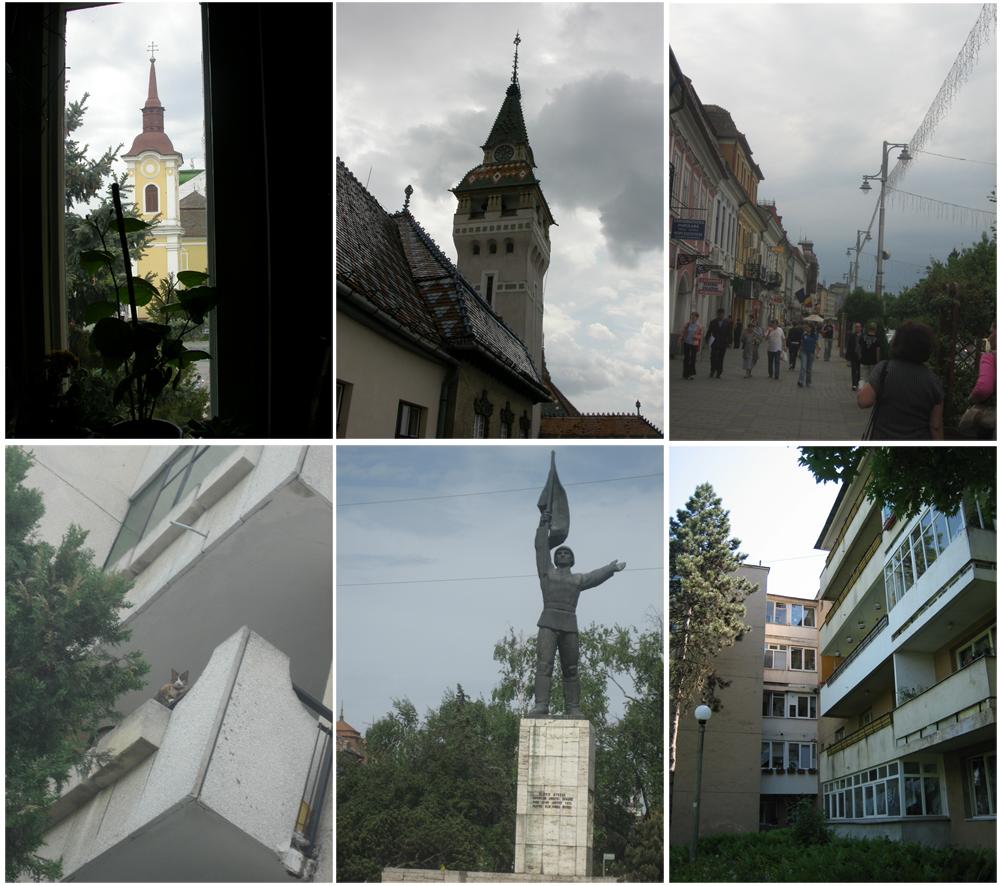
The Rumanian Orthodox Church was thoroughly Byzantine, not to mention enormous. It had no shortage of faithul visitors, who came to pray at lunch hour as if the world were about to end.


We could hear the bell ringing from a smaller church every morning near our place. We were disappointed to discover that the bell, so authentic from a distance, actually came through a speaker, from a tape. Also, the church was built as an exact, carbon replica of an older church that once stood in the same spot.

On the outside, you could light a candle for the living, and another for the dead.


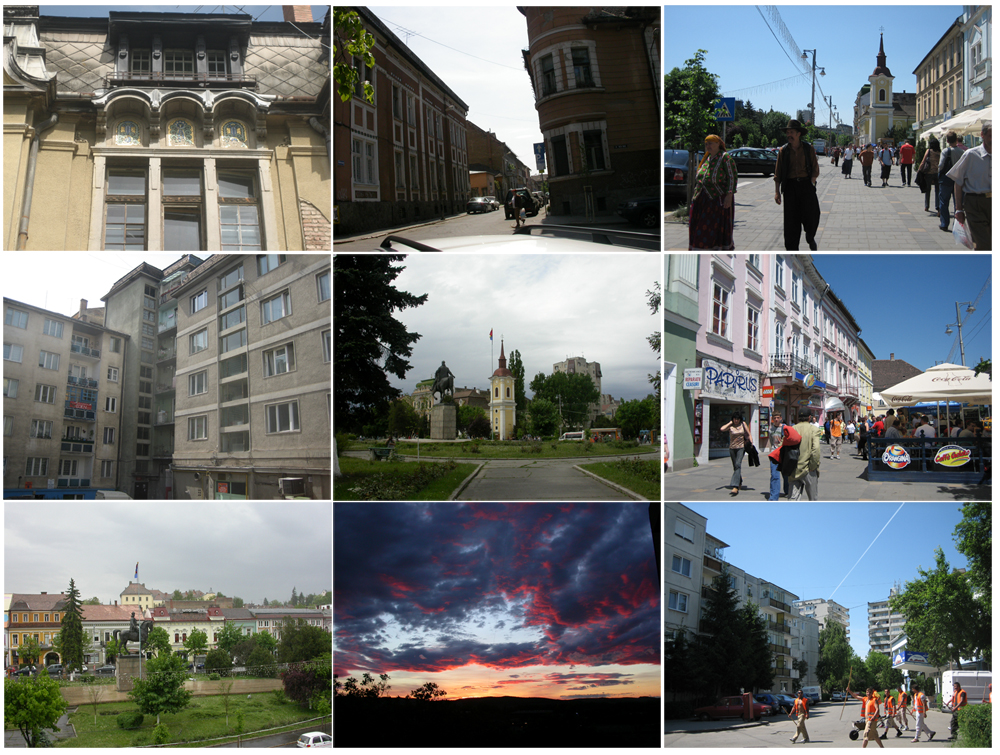
Sometimes traffic lights didn't work, and the odd Dacia from the 70s needed some work, but for the most part, cars were well kept in Tirgu Mures...except for their mufflers, which made the town stink like diesel, and the insanity of traffic in a town built before cars were invented.


ULTRA LATINA is a Romanian nationalist youth slogan, or something to that effect. The Hungarians respond by either crossing out the sign entirely, or by simply adding an R, so it would read "Ultra LatRina". Meanwhile, RATICIDE is used to poison dogs. I believe these posters are warning ads that list numbers to call in case you ingest some by mistake...oh, and apparently, BOYS and not Girls, suck.

In a couple of places, you can see more sloganeering, most specifically, ones that read "MURES TERITOARE ROMANESTE". How nice that they make us feel welcome in our own hometown.

Romanians have a name for Hungarians in Transylvania, "Bozgor", which most likely comes from Slavic origin ("bez gorod" in Russian means "without place"). Considering that Magyar tribes began settling Transylvania as early as the 700s, it's a pretty inaccurate statement. I don't mind abuse, as long as it's accurate.

Romanians believe that they are descended from Dacians, a group of people who fought against Romans who had a military presence in the area. According to the Daco-Roman theory, the central argument behind Romanian nationalism, the Dacians and Romans interbred, and thus was born the Romanian people, who then settled in the Carpathians for a few centuries, without leaving behind any traces of their civilization, and then of course when they came back down from the mountains, the Magyars oppressed them and drove them away.

This theory is rejected by a majority of specialists in the field. A more accpeted notion is that the Romanian people are of diverse origins, and are more likely to have come out of Albania and Greece as nomads who had close links with Italians. But because the Daco-Roman theory has been propped up by modern Romania, it's a deeply entrenched belief system, fuelled by Antonescu in WWII and perfected by Ceausescu afterwards. Nevermind that there is absolutely no direct or even indirect evidence to support this theory, not an iota of proof in a 1000 year period. Nevermind that the Magyar kings invited Wallachs (Romanians before they were referred to as such) to settle in Transylvania to avoid Russian and Turkish oppression. Nevermind that the Latinization of the alphabet was facilitated by Hungarians, whose church was under the jurisdiction of Rome (the Romanian Orthodox Church, under the Byzantine powers, was insistent upon Romanian retaining the Cyrillic alphabet). Nevermind that the Romanian people were able to freely develop their own national identity under this supposed period of Hungarian repression. Nevermind history, fact or common decency.

Thus, to the term "Bozgor", and the idea that Transylvania is the ancient homeland of Romanians, I object not on nationalistic, but factual grounds.


Everyone is in love in Romania, everyone. At the very beginning of each day, and at the very end of my night, I'd walk by Parcul Indragostitsilor - "Lovers Park". If I brought a Canadian girl to a park like this, she'd probably hit me or run away.


"Jesus ete bun cu noi!!!"

* Read parts ONE, TWO and THREE.

Thursday, June 28, 2007

Erdély induló : PART THREE

My mother decided one day to meet up with one of her friends, who she last saw in 1975 or so. The vast majority of people my mother knew left for Canada, the States, Sweden, Germany and Israel, so it was quite exciting for her to remember the past with her old colleague from med/dental school.


They found my mother's old apartment from when she was really little while her father was at war in Korea. She tried to climb out of the balcony once at the age of three. It was one of the many stories my mom told me of her climbing out of a balcony.


This was the last place my parents were before they left Romania. It's still a police station. She remembers watching my dad get interrogated. "They hurled endless insults at him, and threw things in his face, and I just sat there saying nothing," she told me. A sympathetic bureau official gave them a visa to leave, and the next thing they knew, they were on a plane to Israel. A year later, they made it to Toronto.


A back alley caught my mother's eye. Turns out a childhood friend lived there, a Romanian girl she used to play with, whose name escapes her. The remains of the house were the greatest signs of decay that Tirgu Mures had to offer.


This is where the cool kids hung out in the 60s. It's now marshland and illegal to swim in it due to pollution. I'm trying to look like my dad in his Kafka phase, circa 1966.

There's a ferry on a zipline that can take you to an island, but it'd be prudent to take your own boat, as the ferry driver drinks a lot and sometimes forgets to bring people back.


The abandoned pool, where my father used to teach swimming. Now a place where children in bicycle gangs pop wheelies endlessly. Wild dogs fuck each other in the boiler room. There must have been people living there, as I found dilapitated mattresses beside the boilers. The pictures have gone missing, but you don't really want to see them.


Down the way is a small Gypsy enclave. The Roma people, as they're known officially (Tsigani Bozgor if you're a dick), live poorly in the cities, but quite well in the country villages surrounding the towns. There were people outside of these houses we saw, but I was unwilling to photograph them, in consideration of the fact that they've been exotocised heavily ever since cameras were invented. They're usually a very cheerful, vibrant people, but the folks I saw living on that stretch by the pool carried a serious look of discontentment and dissatisfaction on their faces, as if life itself were a tedious chore.


No matter who you are in Tirgu Mures, you spend your weekends at...um, The Weekend, a giant outdoor swimming centre, with bars all along the walkways and watersport docks on the river. It used to be a field when my parents grew up there, but even then, it was called The Weekend and everyone showed up.

The poster supports President Traian Băsescu, who was being put to the test with a national referendum on his proposed impeachment. He was on the docket for a series of unrelated, low level corruption offences, but since corruption, theft and neglect are national pastimes, no one cared, and his impeachment did not stand.

More tomorrow. Check out PART TWO and PART ONE.
Erdély induló : PART TWO

Marosvasarhely / Tirgu Mures has been around for hundreds of years, and has existed since 1332, first as a papal estate, then as a royal settlement under King Matyas Corvinus, who was half Hungarian, half Rumanian and a huge hero to everyone. It was the home of the principality court during the Austro-Hungarian era. The Germans who settled there during that period call it Neumarkt am Mieresch. All of its names basically connote "market on the River Maros". In the first part of the Communist era, it was named the capital of the Hungarian Autonomous Province, which barely existed beyond a paper surface. After 1989, there were ethnic clashes between Hungarians and Romanians that made world news.


The town's symbol, which is a dragon's head on a stake. The other is a plaque commemorating "Latinity". While it's debatable whether or not Romanians have Roman genes, their ancestral people adopted a very Latin language. In the Renaissance period, a Latin based alphabet replaced the Cyrillic one (this can be attributed to Hungarian influence, but it never is), and in 1989, the alphabet was adapted once again, so as to rid words of "Slavic" letters as much as possible...hence the new spelling: Targu Mures.


Romulus and Remus suck on the teats of their mother, the Golden She-Wolf (not gold for this occasion).


I'm Jewish on my father's side, so we found the Jewish cemetary, dug deep into the hill on an unmarked road. It's run by an old woman and her husband, and she knows exactly where everyone is buried. She helped us find them, and it's a good thing she was there. It was a treacherous find, as walking between the tomb-like grave stones was near impossible. Whole stones were covered in ivy, and brushing back the leaves would reveal entire families killed at Auschwitz.


There's a statue in one of the commemoration room sculpted by Iszak Marton (or Martin Issac), a friend of my grandmother's, who used her family as his inspiration. The final version of the memorial can be found downtown.


The synagogue, open only for holidays since the 1950s, and occasionally vandalized by neighbourhood anti-Semites of all stripes, can be found by the memorial at the corner. On the memorial, the Holocaust is blamed solely on Hungarian Fascists, which only tells part of the story. As if the Romanians Fascists had any more love for the Jews?


"It's all a pissing contest", as one of my uncles likes to say. Squabbles aside, both cultures exhibit high degrees of artistic merit when commemorating their dead. The Romanian cemetary (not sure if it's Catholic or Orthodox) is a sight to see, especially the numerous photographs of the deceased encased into the stone surfaces.


The Hungarian Catholic cemetary is also a highlight of local craftsmanship. It's incredibly traditional, adopting Szekely symbols and runes. Much of my mother's family are buried there, as well as colleagues and friends. Let's not forget early Hungarian champions of the nation-state concept, hanged by the Austrians after 1848.


My mother's family are wonderful. Her nephew is married and has two hilarious, delightful kids who like AC/DC and Scooby Doo. Their mother is a fantastic actress at the town theatre, and has worked with some famous people in Romania.

Another of my cousins, closer to my age but a bit older, spent a couple of summers in America, and his English is much, much better than my Hungarian, but we learned a lot from one another. He was an amazing host, and gave up his room for me to stay with his girlfriend (a rehearsal for when they get married?). The two of them are the nicest peeople I can think of, and a symbol of the new successes people have found there. He's a real estate agent who just finsihed business school, with a talent for making jewelry, while she's starting her own dental practise, reopening her family's clinic that they owned before the wars.


While awaiting the completion of their new house on the outskirts of town, the kids and their parents had to stay with my uncle and aunt in a small apartment. There was always happy commotion there, meals galore, way too much booze and apparently, a couple of turtles.


I loved hangin' with the fam at both apartments, one downtown and the other on the hill. At the downtown location, some of the *ahem* less educated members of society use the courtyard as a personal W.C. while they wait for the bus. The city won't build a fence, and it's no consolation that they send someone to clean it once in a while. The city, it seems, is still figuring out who's job it is to clean up shit and build fences.

While there may be Number Twos in the bushes, there's still good times upstairs, like pipe smoking and drinking shots or alarmingly clear alcohol. On the streets, we can goof off and make funny faces and no one cares. Across town at the other apartment, we sing CCR songs, and drink more shots of alarmingly clear alcohol.


Then we party...


...and get crazy medieval.

More to follow...meanwhile read PART ONE.

Thursday, May 31, 2007

Erdély induló : PART ONE

My parents are ethnic Hungarians from Maros Vasarhely, in Transylvania, modern day Romania. I travelled there this month with my mother and my step-father (my father did not join us). The purpose of the experience was to revisit our homeland, or in my case, see it for the first time, and meet relatives I'd only known through photos and numerous stories.


Transylvania is a peculiar place, mainly because it's a region with a huge question mark over its head. From the late 800s until the 20th century, Transylvania was, more often than not, a coveted piece of land, but a territory protected within vast Hungarian borders, with occasional incursions by Turks, Austrians and Russians. Such is not the case any longer. Apart from a brief period during WWII, Transylvania has been under the control of Romania since the end of WWI, and Hungarians there have had to fight (but thankfully not kill, or die) for the retention and visibility of their culture.


The houses where my father and mother grew up respectively...no longer in family hands.

We once lived in the majority, but our numbers have dwindled to about one-third of the Transylvanian population, and while places like Vasarhely remain 40/40 (the remaining 20% are made up by Gypsies, Germans, Serbs and Croats), it's still dominated by Romanian language and culture. My family represents three generations of Hungarians who lived through the Romanianization of their birth names, schools and workplaces, and life there is not easy for them.


Vasarhely is small, and like Kingston, it's a university town, rife with contradictions. It's architectural makeup is split between Hungarian turn-of-the-century style and Romanian Communist utilitarian structures. It's a vat of varying tastes, with urbanity and renewal as the fine extract, and ruralism and decay in the swill. On the pallet sits an aftertaste of diesel fuel.

There are few riches to acquire, and those who have them hoard them. Beautification and renewal are only concepts there, and even then, they're scarcely considered. There's garbage and dirt everywhere, especially in public parks.


The sky is either pleasantly bright, or terrifyingly dark.


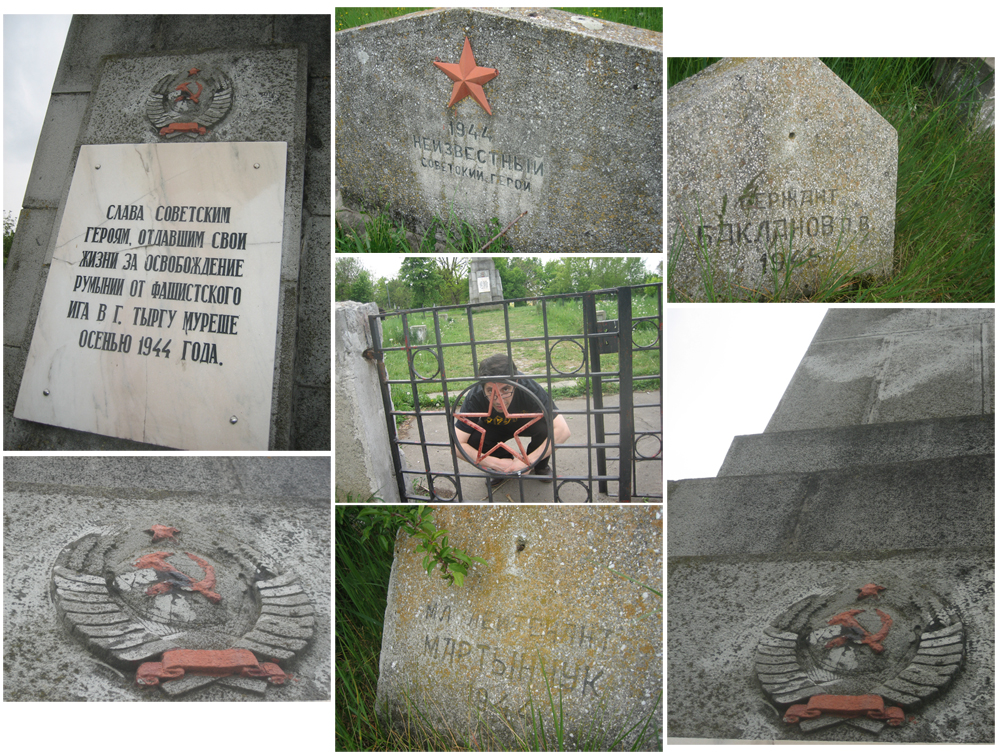
Death is a prevalent theme. Among many graveyards is the Soviet Heroes park, up on the Trebely, a hill surrounding the city. My father used to play there as a child, now it's "buried in the weeds", as one travel writer once wrote.


Segeant Baklanov, Lieutenant Martinchuk, and other Soviet Heroes lie in rest, while the hammer-and-sickle stones are blacked out and replaced with swasztikas.

In WWII, the German/Hungarian/Romanian forces fought against the Soviets on these hills, and then the Romanians switched sides in 1944. Romania was under communist control until 1989, after which all efforts to maintain memorials to Soviet victories ceased. Romanian graves, however, are kept up nicely, while there are absolutely no commemorations to Hungarians who died in the war.


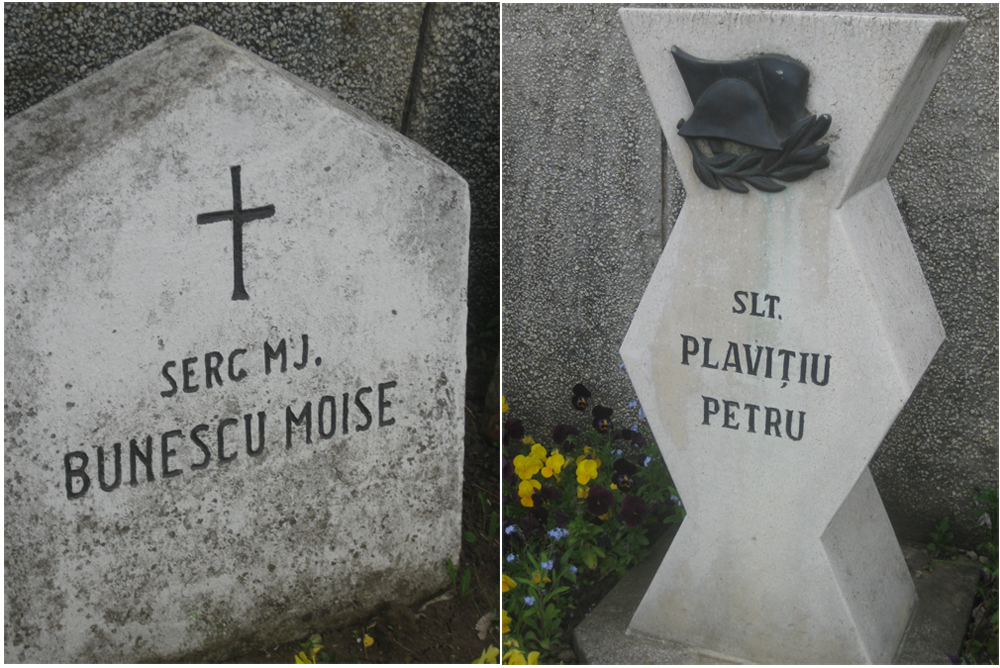
Crosses for before the switch, when they were fascists, and of course, Soviet heroes for afterwards.

More posts from the Transylvania trip to follow over the next few days.

Wednesday, January 10, 2007

JANVIER, QU'EST-CE QUE CEST?


Salem's Loft #1


Salem's Loft #2


Soldatengeist


Three Ladies In A Parlour

Friday, November 24, 2006


He had a dream last night that he was flying in the passenger seat in an open cockpit plane. A young woman shared the seat with him. He sat at th edge of the seat, leaning back against her chest, while she clutched him and put her face before his, both of them staring forward. All he could see was a dim sky ahead of him, and some errant locks of hair from the girl's head behind him. Just as it was starting to feel really exhilirating, he could hear the alarm going, and so ended his trip back in time.

*******

A history of Transylvania...the book could never be written, not in any semi-objective or official context. It would only be tainted with sentimentalism, bias and, prejudices, depending on who writes the book, where they come from, what their interests might be, but perhaps more importantly, when they wrote it. All that can be measured is how much investment in that book each writer has. But perspectives change over time, so what one person thinks in one era might be totally aligned with thoughts of the future, but terribly out of place in their own time.

Like any region, it had been inhabited by numerous peoples. Each little subsection of Transylvania could, in all possibility, be claimed by at least a few groups, supposing all of these groups still existed, and had a forum to communicate. But such is not the case, and beyond that, what constitutes a "people" remains unclear. What became of the Dacians, who settled there before the Romans? There are also the Huns, who spread their genes into the Magyars (or Hungarians as the English call them), yet one cannot say that Transylvania is an Asiatic place. There are Germans who inhabit whole communities, and then there are the Csángó, who, in popular wisdom, "have German blood, speak Hungarian, and dress like Romanians." The Szekely, who live a traditional life beyond towns and cities, have similarly intertwined roots and customs. There are the Macedonians, and Greeks, who are now referred to in obscure linguistic journals as Aromanians. Finally, we have the Ruthenians, so few in number, who can only be some combination of Romanian and Russian, with perhaps some Serb in there as well? Who knows, really.

By the turn of the 19th century, where our story more or less begins, Transylvania had become a strong and independent slice of Austro-Hungary, known for its localized justice system, and the relative prosperity and respectability of its noble classes. The several provinces that made up Transylvania proper weren't exactly typical places, but they were not altogether foreign in the larger context of the Empire. In that period, Braham Stoker would steal an old legend about bats, and with little thought, picked a name from bloodier times, and thus came about the ridiculous Dracula story. Vlad the Impaler had nothing to do with bats. He did have a lot to do with impaling, however. There are tales of him having impaled 30,000 victims in one go, after a battle. No woman, child or breathing soul was spared in the vicinity of victory.

Blood has always flown by violence in Transylvania, but not a lot of it was visible, not in an en masse fashion. Under Communsim, for instance, most murder was committed behind closed doors, usually by the hand of a well trained, hardened officer of the security services. By and large, the region lived in peace and prosperity. But there was no lack of cruelty when blows were stricken. The Turks committed atrocities that killed thousands in days. One cannot forget the Jews, who took the brunt of their fate towards the end of the war, but took it no less harder than any of Hitler's enemies. The number of battles and clashes that took place there are almost too many to count. To tally every incident involving mass slaughter or acts of war would only confirm the obvious.

The enduring conflict, in modern times, concerned until recently only two groups of people. Hungarians and Romanians both held a special regard for "the place beyond the forest", both claiming it homeland, and neither relenting at any point.

Wednesday, April 19, 2006


It was afternoon and the clothes on the line hung peacefully in the back yard garden. Little Miki, for the first time in his life, saw the sun dry a wet piece of garment. It was then that his brother was brought back home on a carriage by a man from the country.

"Why has he come home like this?" asked his mother as a carriage rolled through the front gate. Little Miki then saw his brother, from a distance, haggard and barely awake, lying on a flat wagon with large wooden wheels. His mother had torn her shawl from her head and tears streamed down her screaming face like Miki had never seen before. One of his older sisters quickly shoed him inside, and he hid under a bed until it was dark.

The first few days were quiet. Miki's returning brother was placed by the woodstove. The sisters all took turns taking care of him at night, while Miki was excused on account of his young age. But during the day, his mother took care of the returning son. He had left because of a spat with his father, who had since set out to find him.

Upon first appearance he had lost a great deal of weight and his body was covered in bruises, as if he had been beaten or mugged. He carried no bag and was dressed without shoes, covered in mud head to toe. After he was bathed and fed, he fell asleep and woke up only intermittently for a week, eventually developing a pattern of sleeping in shifts of several hours, waking to eat, and then sleeping again.

It was some time later, perhaps weeks or months, that Miki's brother had started to cough blood. His mother immediately called a doctor, who tentatively diagnosed TB and told her not to handle any blood without wearing leather gloves and cleaning it with hard soap.

At first, Miki's brother would spit his discharge into a bowl provided by one of the sisters, but his hostility towards the situation was such that he began spitting it onto the wall instead, more than likely out of spite.

His mother did not take kindly to this blood spitting, and immediately began scolding him. Yet everyday, without saying a word, Miki's brother continued to spit his blood onto the wall.

When Miki's father returned, he immediately barred any of the children from entering the central room of the house where Miki's brother slept and spat. He took out his kit but realized that if it were TB, as his wife had told him, he wouldn't be able to take the risk of touching the boy if he didn’t have to. He would have his wife continue to clean the blood, under his supervision, and he would make sure she cleaned it thoroughly.

The children were sent by their father to stay with their aunt a few days later, and were told to say goodbye to their brother through the window into the central room on the day they left. He was asleep, and fresh blood trickled down the wall beside the bed, but the siblings all said their goodbyes to him through the window as told.

Miki's brother died not too long after, and the family burned the house down, contents and all, and built a new one a few acres off.

Sunday, April 16, 2006


He sometimes feels that he's on the verge of witnessing large, seizmic things, yet every passing day grows stiller and quieter than the last. The more alienated he imagines himself from the ways of others, the more confidence he finds in his own ideas. He's not clear about his values and often thinks he has none, but he knows that deep down, something will change in him, something that will allow him the benefit of hindsight, which he has yet to accrue.

*******


Under the lantern, he could see the dark water drip slowly into the bucket. It had been seven weeks since he'd run away, and three days now without proper food or water. His lips had cracked hours ago and his stomach had more or less shrank to the size of a small pouch.

But there it was, this beautiful bucket under the light, in a back alley in Segesvár, or Sighisoara as the Rumanians called it, where Vlad the Impaler, Dracula, had been born and raised. It's difficult to say whether or not he noticed the discordant colours of the water in the bucket, or the material floating in it, but in his unyielding thirst, he might have simply ignored the hazards. He drank of the bucket, sticking his face straight into the cesspool as if searching for apples at a county fair contest.

He slumped to the ground and lay for what might have been hours before he heard a sound, which turned out to be a carriage stopping in the near distance.

Friday, March 31, 2006

Tuesday, February 28, 2006


HARDCORE MAN by
Perennial Machete (Dan Hildebrand /Steve Birek /Matt Thompson)
Never to be Released

He's a hardcore, hardcore man

Lives his life by a hardcore plan
(He's a hardcore, hardcore man)
Drives around in a hardcore van
(He's a hardcore, hardcore man)
Has a brother named Hardcore Dan
(He's a hardcore, hardcore man)
Eats his lunch from a hardcore can
(He's a hardcore, hardcore man)


He's a hardcore, hardcore man

Lives his life by a hardcore plan
(He's a hardcore, hardcore man)
Cools his room with a hardcore fan
(He's a hardcore, hardcore man)


He's a hardcore, hardcore man

Tuesday, December 27, 2005